Hedge Trimming: Tips for Healthy and Well-Maintained Hedges

Keeping your hedges well-trimmed is essential for maintaining a tidy garden, promoting plant health, and ensuring safe and visually appealing outdoor spaces. Whether you’re managing a small backyard or a larger property, knowing when and how to trim your hedges can make a big difference.

Why Hedge Trimming Matters

Regular trimming helps hedges grow dense and healthy while keeping them neat and attractive. Well-maintained hedges also improve privacy, act as natural barriers, and can even reduce noise and pollution around your property.

Best Practices for Trimming Hedges

  • Timing: Trim hedges outside of peak nesting season (usually March to August) to protect wildlife.
  • Tools: Use the right equipment, from hand shears for smaller hedges to long-reach trimmers for taller growth.
  • Shaping: Trim hedges with a slight taper — narrower at the top — so sunlight reaches lower branches, promoting healthy growth.

Legal Considerations

In England, hedgerow management rules prevent trimming hedges covered by regulations from 1 March to 31 August unless exemptions apply. These rules protect wildlife and preserve hedgerow ecosystems. For official guidance, see the government’s advice on hedgerow management:
👉 Hedgerow management rules – GOV.UK

Additionally, if a hedge overhangs a public road or footpath, local authorities may require it to be trimmed to maintain safety. Hampshire County Council provides guidance for overgrown vegetation affecting highways:
👉 Hampshire County Council – Vegetation obstructing the highway

Professional vs DIY Trimming

While smaller hedges can be trimmed by homeowners, large, overgrown, or hard-to-reach hedges are best handled by professionals. Expert trimming ensures safety, reduces risk to property, and produces a cleaner, more uniform finish.


The Importance of Removing Dead Trees: Our Recent Work in New Alresford

At Gecko Tree Surgeons, we take pride in maintaining the health, safety, and beauty of trees across Hampshire. Recently, our team carried out a major project in New Alresford, where we were tasked with removing several dead Leylandii trees from woodland areas. What might seem like a simple clearance job was, in fact, a vital step in protecting the surrounding environment and ensuring the long-term safety of the site.

Dead or dying trees are not just unsightly, they can be dangerous. In this blog, we’ll walk through what we did in New Alresford and explain why removing dead trees is such an important part of responsible woodland and garden management**.

The New Alresford Project

Our recent project involved the careful felling and removal of several dead Leylandii trees within a semi-natural woodland area on the outskirts of New Alresford. Over time, these fast-growing conifers had reached maturity but succumbed to disease, competition for light, and poor soil conditions, leaving them brittle and unstable.

Using specialist rigging and felling techniques, our experienced team safely dismantled each tree piece by piece. The aim was to prevent damage to surrounding healthy vegetation while maintaining the ecological integrity of the woodland. Once felled, the timber and debris were processed on-site and either recycled into mulch or safely removed for disposal.

The result was a tidier, safer woodland with space for new growth and a reduced risk of falling branches or collapsing trees during high winds.
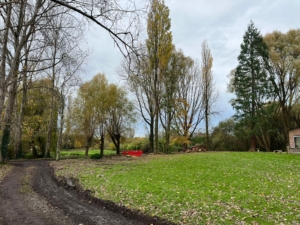
large leylandii tree felled

Why It’s Important to Remove Dead Trees

It’s easy to overlook a dead tree — after all, it’s not always immediately obvious that a tree has died. However, leaving a dead or decaying tree standing can pose serious risks and lead to long-term environmental and safety issues. Here’s why timely removal matters.

Safety Comes First

Dead trees are structurally weak. As they dry out, their branches become brittle, and their roots lose strength. Even a mild storm can cause large limbs or entire trees to fall unexpectedly.

In woodland areas, this presents a risk to walkers, neighbouring properties, and wildlife habitats. In gardens or urban settings, the danger is even higher — a falling branch can easily damage roofs, vehicles, or fences. Removing dead trees before they become unstable is the safest and most responsible choice.

At Gecko Tree Surgeons, we always conduct a risk assessment before removal to ensure the process is carried out safely, efficiently, and in full compliance with environmental regulations.

Preventing the Spread of Disease and Pests

Dead trees often harbour fungi, bacteria, and wood-boring insects that can spread to nearby healthy trees. Common culprits include honey fungus, root rot, and beetle infestations all of which thrive in decaying wood.

By removing dead Leylandii and other diseased trees promptly, you help protect the wider ecosystem. In the New Alresford project, this was especially important to stop fungal infections from spreading through the surrounding woodland.

Once the deadwood was cleared, the remaining trees had more access to sunlight, water, and nutrients — allowing them to thrive and maintain the natural balance of the area.

Encouraging New Growth and Biodiversity

While deadwood can play a role in some ecosystems (providing habitat for insects and fungi), an excess of decaying trees in one area can stunt regrowth and reduce biodiversity. Removing dead Leylandii opened up light gaps in the canopy, giving native species like oak, ash, and birch room to grow.

This natural regeneration process is essential for maintaining a healthy, diverse woodland. It encourages undergrowth, attracts birds and pollinators, and supports a wider range of wildlife. Our selective approach ensured that the removal enhanced rather than disrupted the surrounding environment.

Improving Aesthetics and Land Value

From a homeowner or landowner’s perspective, dead trees can make a garden or woodland look neglected and unsafe. Removing them not only restores visual appeal but can also increase property value and create usable outdoor space.

In New Alresford, the difference was immediately noticeable. Once the dead Leylandii were cleared, the woodland opened up beautifully, with more natural light and a healthier, tidier appearance.

Reducing Fire Risk

Dead and dry trees act as fuel in the event of a fire. Especially in prolonged dry periods, old conifers like Leylandii become highly flammable. Removing them reduces the risk of fire spreading quickly through wooded areas or near residential properties.

By clearing deadwood and maintaining a well-managed tree canopy, landowners can greatly improve site safety and environmental resilience — a key reason many councils and land managers now encourage proactive tree care.

Our Professional Approach

Tree removal, especially in woodland settings, must always be carried out by trained professionals. At Gecko Tree Surgeons, safety and environmental care are at the core of everything we do.

For the New Alresford project, our process included:

* A full site survey and safety assessment
* Use of climbing and lowering techniques to protect surrounding trees
* Careful felling and sectional dismantling of dead trunks
* Responsible disposal and recycling of materials
* Site restoration and clean-up to encourage new growth

Our experienced arborists are fully qualified and insured, ensuring every job meets the highest industry standards.

Protecting Your Woodland and Garden

Whether you’re managing a large woodland or simply caring for a few trees in your garden, regular tree inspections are essential. Spotting early signs of decay — such as fungal growth, leaf loss, or dead branches — can help you act before a tree becomes dangerous.

If you suspect a tree on your property is dead or dying, don’t wait until it causes damage. Our team can assess the situation, advise on the best course of action, and carry out safe, efficient removal if necessary.

Dead trees might seem harmless, but they can quickly become a serious safety hazard and a threat to the surrounding environment. Removing them not only protects your property but also supports the long-term health and balance of your landscape.

Our work in New Alresford is a great example of how responsible tree management benefits both people and nature. At Gecko Tree Surgeons, we combine expertise, safety, and environmental care to keep your outdoor spaces healthy and beautiful all year round.
How to Spot When a Tree Needs to Be Removed

Trees bring beauty, shade, and character to gardens and green spaces across Southampton and the surrounding areas. But while healthy trees can thrive for decades, there are times when removal becomes the safest and most responsible option. Whether due to disease, storm damage, or structural weakness, recognising the signs a tree is dangerous is crucial for protecting people, property, and neighbouring plants.

As professional tree surgeons in Southampton, our team at Gecko Tree Surgeons Ltd is often called out to assess whether a tree can be saved or if it needs to be removed. Below, we’ve outlined some of the most common warning signs to look out for, along with guidance on when to call in the experts for safe and efficient tree removal services.

Visible Decay or Rot

One of the clearest signs that a tree may need to be removed is visible rot or decay. This can appear as:

  • Soft, crumbly wood inside the trunk
  • Cavities or hollowed-out sections
  • Fungus or mushrooms growing on the bark
  • Dead bark peeling away from the tree

Rot weakens the structural integrity of a tree, making it more likely to fall during high winds or storms. If decay is confined to small branches, pruning might be enough. But when the trunk or major limbs are affected, full removal is often the safest option.

Large Cracks or Splits in the Trunk

Cracks running vertically along the trunk or large splits in major limbs are a serious concern. These fractures usually mean the tree can no longer support its own weight. In time, they can cause entire sections to break away, posing a risk to nearby homes, cars, or people.

Our experienced team at Gecko Tree Surgeons Ltd often encounters trees in Southampton gardens with hidden cracks only visible on closer inspection. That’s why regular checks by a qualified arborist are invaluable.

Dead or Falling Branches

Shedding leaves is natural, but shedding entire branches is not. If your tree is regularly dropping large limbs, this can signal declining health or internal disease. Dead branches not only spoil the look of your garden but also create hazards, especially in areas where children play or cars are parked.

If just a few branches are dead, our tree pruning services can restore health and shape. But if more than 50% of the crown is dead, removal is typically the best option.

Leaning or Unstable Trees

A tree that suddenly starts leaning can be an indicator of serious root damage. While some trees naturally grow at an angle, a lean that develops quickly suggests instability. This often happens after heavy rain when soil becomes waterlogged and roots lose their grip.

In Southampton’s coastal climate, where strong winds are common, a leaning tree is a potential danger. Our team can assess whether corrective support will help, or if a full removal is the safest course of action.

Storm or Weather Damage

Southampton residents know the impact storms can have, particularly on older or weaker trees. Signs of storm damage include:

  • Broken or hanging branches
  • Split trunks
  • Uprooted roots
  • Trees tilting dangerously after heavy winds

When trees are damaged in this way, emergency tree surgery may be required. At Gecko Tree Surgeons Ltd, we provide emergency call-outs to make dangerous areas safe, whether that means removing hazardous branches or carrying out a complete tree removal.

Disease or Pest Infestations

Trees are living organisms and can be affected by diseases and pests. Common symptoms include:

  • Discoloured or spotted leaves
  • Premature leaf drop
  • Excessive sap leakage
  • Visible insect damage

Left untreated, disease and pests can spread to other trees in your garden or neighbourhood. While some conditions can be managed with pruning and treatment, advanced infections often require full removal to protect surrounding trees.

Root Problems

Roots are the foundation of a healthy tree. If they become damaged by construction, compacted soil, or rot, the entire tree is at risk. Warning signs include:

  • Heaving soil around the base
  • Fungi or mushrooms near the roots
  • Trees tilting after rainfall

Because root problems are often hidden underground, they’re difficult for homeowners to diagnose. That’s why calling a qualified tree surgeon in Southampton is essential if you suspect root damage.

Why Professional Tree Removal Matters

Removing a tree is not a DIY task. It requires experience, specialist equipment, and a clear understanding of safety practices. At Gecko Tree Surgeons Ltd, we:

  • Provide full site assessments to determine whether removal is necessary
  • Use industry-standard equipment to remove trees safely and efficiently
  • Handle waste disposal responsibly, recycling or chipping timber where possible
  • Offer competitive, transparent quotes for all tree removal services

Attempting tree removal without the proper training can be extremely dangerous. Hiring professionals ensures the job is done safely and your property is protected.

Protecting Your Property and Garden

A dangerous tree doesn’t just pose risks to safety — it can also cause costly damage to driveways, garden walls, fences, and nearby buildings. Removing unstable trees in good time not only protects your home but also creates space for new planting, enhancing the beauty and health of your outdoor space.

If you’re unsure about the condition of a tree, our tree care specialists can provide expert advice and recommend whether pruning, treatment, or full removal is required.

Get Expert Help in Southampton Today

If you’ve noticed any of these signs a tree is dangerous, don’t ignore them. Our trusted team at Gecko Tree Surgeons Ltd offers professional tree removal services in Southampton and the surrounding areas. Whether it’s routine maintenance or urgent emergency tree surgery, we’re here to help.

Contact us today for a free, no-obligation consultation and let us keep your garden safe, tidy, and looking its best.